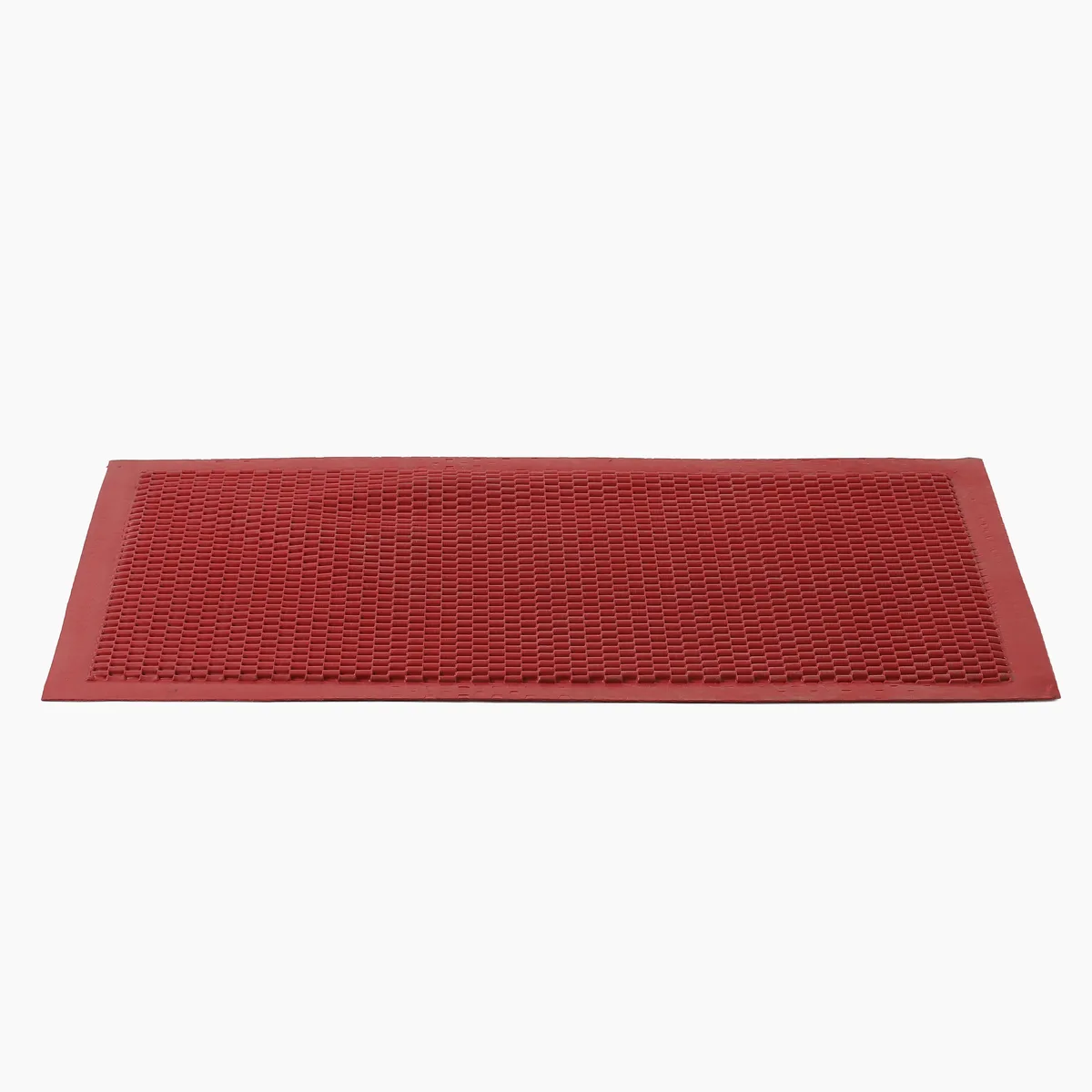

School entrances face a special monsoon problem: hundreds or thousands of students arrive in short bursts, often with wet shoes, mud, bags, umbrellas, and fast movement. A small doormat cannot handle that load.
Schools need a simple entrance matting system that scrapes mud outside, manages moisture inside, and stays easy for housekeeping teams to clean.
The best setup for schools
Use two or three matting zones:
- Exterior scraper mat before the main door
- Ribbed or scraper-wiper mat at the doorway
- Interior mat in the corridor or lobby
This gives each student several steps on matting before reaching the main floor.
What to avoid
Avoid thin mats that curl, slide, or move during arrival time. Also avoid mats that are so heavy that cleaning teams cannot lift them regularly.
At school entrances, edges matter. A mat that rises at the corner can become a trip risk when students are walking quickly.
Where else schools need mats
Beyond the main gate or entrance, schools may need mats at:
- Cafeteria entrances
- Wash areas
- Science labs
- Sports building entrances
- Library and admin block entrances
- Covered corridors exposed to rain
Each area may need a different mat. Wet zones need drainage; entrances need scraping; admin spaces may need cleaner-looking mats.
Recommended Softurf products
2-Rib Mat works well for school entrances and corridors because it captures dirt in the grooves.
SMat Ultra is useful where rainwater and wet footwear are frequent.
Chain Mat is a strong exterior scraping option for mud-heavy entry points.
Quick answer
Schools should use a multi-zone entrance matting system during monsoon: scraper mats outside, ribbed mats at the doorway, and interior mats where students continue walking. The system should be easy to clean, wide enough for student traffic, and flat enough to prevent trips.