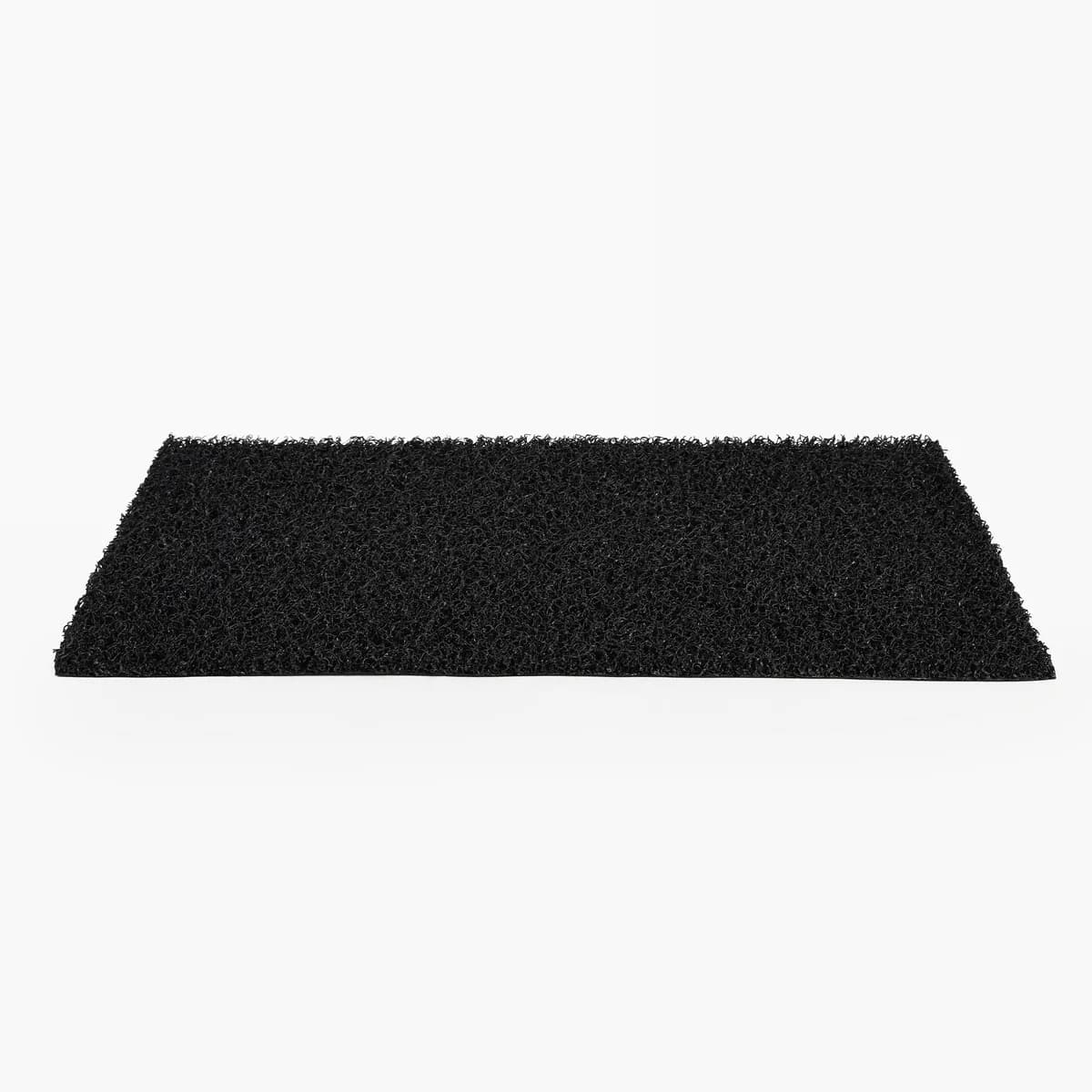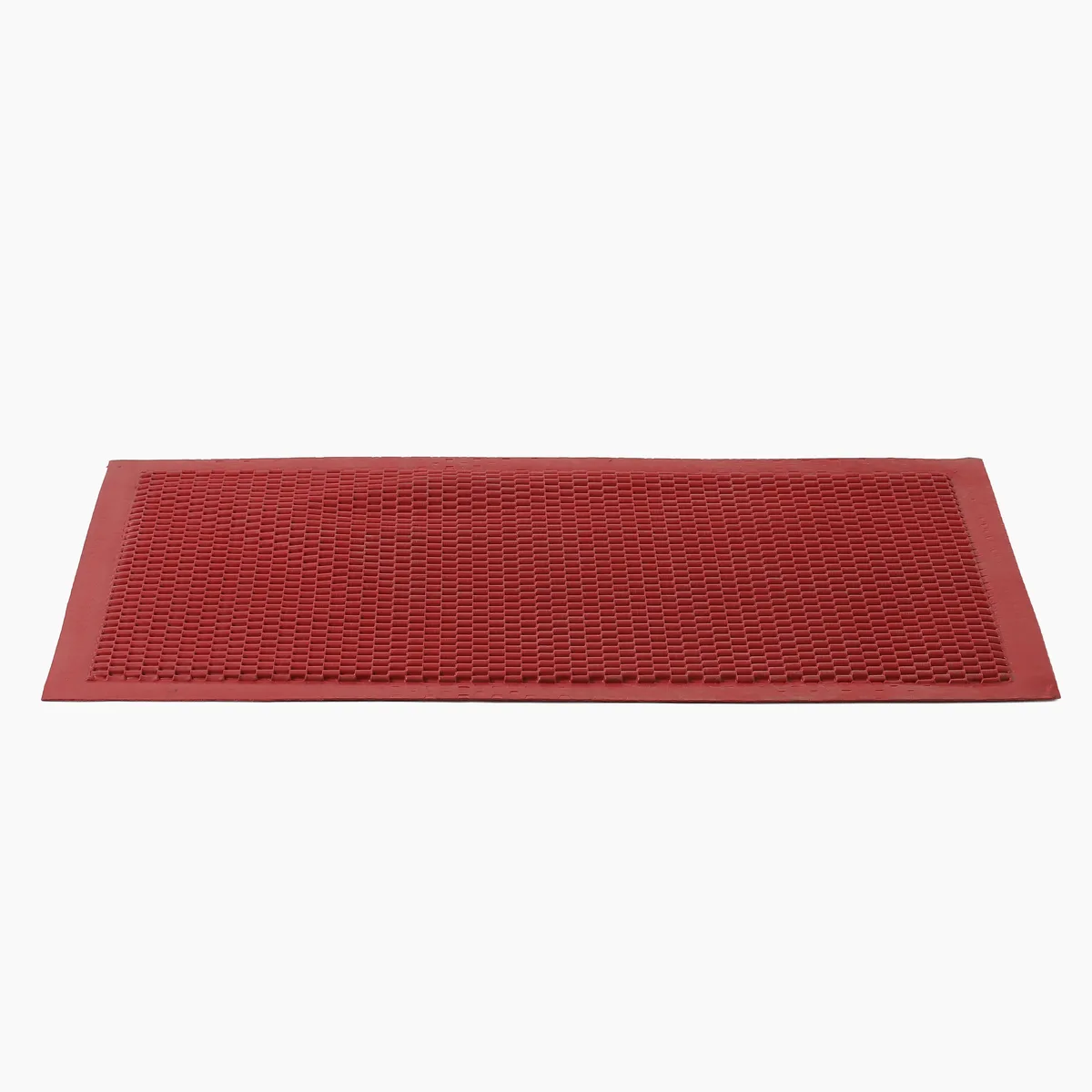

Indian monsoon conditions change how an entrance mat should be selected. The same doorway that works with one small mat in dry months may need more scraping, more walking length, a spare mat to rotate, and a cleaner maintenance routine when people enter with wet footwear, umbrellas, bags, and trolley wheels.
Quick answer
For monsoon commercial entrances, use a 3-zone setup: SMat Hydra as the first-zone dust-capture mat, 2-Rib for the ribbed zone, and 15 mm Cushion Maxx for wiping and as the commercial doormat. Keep a spare mat to rotate so the door is never bare while one is hosed and dried. Open Softurf entrance mats. Most ranges are 12 × 1.22 m rolls.
Start with the entrance condition
Do not begin with the product name. Begin with the site condition:
| Site condition | Better starting point |
|---|---|
| Covered office or lobby entrance | Rib mat |
| Muddy outdoor-to-indoor approach | Chain mat |
| Wet service entry or wash zone | S mat |
| Interior runner where people stand | Cushion mat |
| Compact reception or shop doorway | Welcome mat |
This keeps the page useful for buyers and avoids treating every rainy doorway as the same problem.
Use enough walking length
Busy entrances need enough matting for several footsteps. A narrow mat at only the door edge may look tidy, but it often fails because people step over it or reach interior flooring too quickly.
Measure the walking path from the outside approach into the lobby or corridor. If people enter from rain directly, plan matting across the path they actually use, not only the door width. For how to measure, see entrance mat sizing for commercial buildings.
Scrape first, then wipe
The first mat should capture dust. Use SMat Hydra in that first zone. Chain Mat stays on muddy factory gates, ramps, and warehouse approaches. It is not the commercial-entrance dust barrier.
After that first surface, a 2-Rib Mat or another ribbed option can support the covered doorway or interior entrance zone. Ribbed surfaces help collect loose dust and are straightforward for cleaning teams to vacuum or lift.
Drain water only where drainage is needed
If water repeatedly collects underfoot, use an open-grid mat such as SMat Hydra. The important point is drainage: water should be able to pass through the mat in wet service areas, wash zones, and other places where a closed surface would stay wet longer.
Do not leave the S mat out of a commercial entrance. It is the first-zone dust-capture mat, and it is also the mat where water must drain. Pair it with rib mats and cushion mats.
Keep a spare mat to rotate
A monsoon entrance fails when the only mat is in the wash. Cut or hold a spare of the same family so housekeeping can lift the wet piece, hose it, and stand it to dry while the spare stays on the floor.
That routine is lift, hose, dry, rotate — work FM teams already do. It does not add a new job to operators. Schools with burst arrival traffic use the same idea; see school entrance mats for monsoon.
Keep interior areas cleaner
Inside the entrance, a cushion mat can help when the building needs a thicker wiping surface, a runner, or a mat near staff standing areas. Cushion Maxx is the 15 mm construction. It is better suited to mostly covered spaces than constantly wet floors. Most cushion ranges ship as 12 × 1.22 m rolls, then cut to the walking path.
For a broader building-level guide, see how to reduce dirt and water tracked into commercial buildings.
What not to do
- Do not rely on one small doormat at a busy rainy door.
- Do not put an S mat on a dry lobby just because it is raining outside.
- Do not leave the doorway bare while the only mat is being washed — rotate a spare.
- Do not ask Softurf for custom logo mats. Softurf does not make them. Keep branding on nearby signage; see custom logo entrance mats.
- Do not invent extra operator work. Cleaning is lift, hose, dry, rotate.
Softurf recommendation
For monsoon entrances in offices, hotels, schools, hospitals, shops, and other commercial buildings, start with the Softurf entrance mats selector and use S mats, rib mats, and cushion mats together. Door mats are mainly for small offices and homes. For a commercial doormat, use Cushion Maxx.
Quote via the contact form, call +91 99007 02839, WhatsApp, or email sales-team@softurf.in. Softurf manufactures in Jigani, Bengaluru, and supplies pan-India with GST tax invoices. Fire-retardant PVC; certificate on request for tenders.