
Hospitals, clinics, and labs need floor mats that support cleanliness, slip resistance, and easy maintenance. The goal is not to cover every floor. The goal is to control dirt and moisture at the points where they enter or collect.
For most healthcare facilities, matting should be planned by zone: entrance, corridor, wet utility, and support workstation.
If you are specifying mats for a facility rather than researching, start with the full range of hospital and clinic floor mats, which sets out material, sizing, and cleaning options by zone.
Hospital entrance mats
Hospital entrances receive visitors, patients, wheelchairs, stretchers, and staff traffic. The mat should capture dust and moisture before it reaches interior floors.
Use a mat that:
- Lies flat under rolling movement
- Traps dust and fine dirt
- Can be cleaned daily
- Matches the entrance width
- Does not create a trip edge
Ribbed mats and dense cushion mats are common choices for hospital entries.
Clinic floor mats
Clinics often have smaller entrances and tighter reception areas than hospitals. A clinic floor mat should be easy to move for cleaning, should sit flat under daily foot traffic, and should match the width of the doorway or reception counter.
Use compact rib mats or washable cushion mats for clinic entrances and front-desk standing areas. Use open-grid PVC drainage mats only where water is present, such as wash rooms or utility areas.
Wet utility and wash areas
Wet zones need drainage, not just absorption. If water sits on top of a mat, the walking surface can remain slippery.
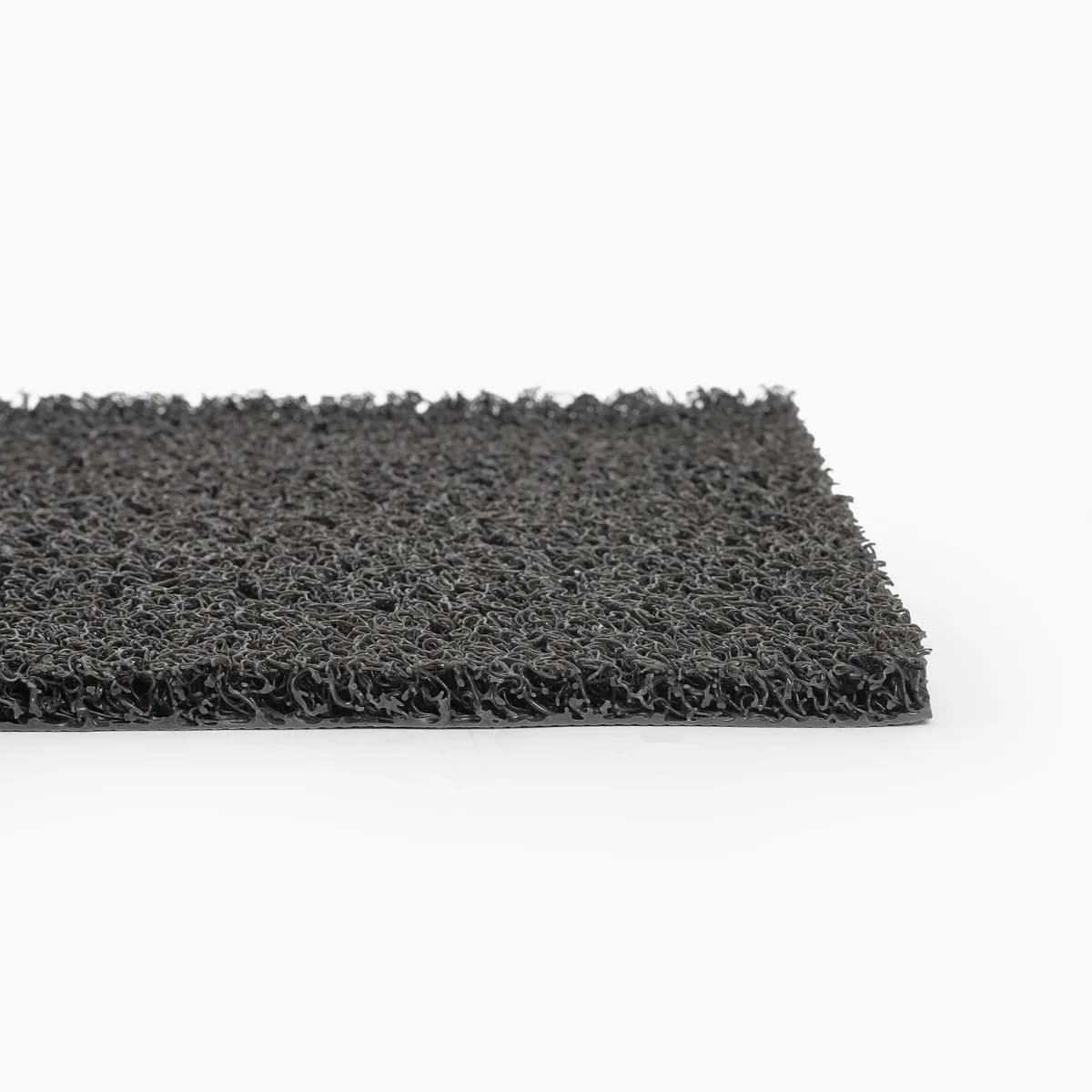
Open-grid PVC mats are better for:
- Wash areas
- Utility rooms
- Scrub-adjacent support zones
- Housekeeping rooms
- Back-of-house wet corridors
The mat should be easy to lift so staff can clean both the mat and the floor below.
Lab and diagnostic support areas
Labs and diagnostic centers often need mats at standing counters, sample handling points, and entry transitions. Choose mats that are easy to clean and do not shed fibers into sensitive areas.
Where the mat is near liquids, drainage and washability matter more than softness.
Recommended Softurf products
These are the individual products. To compare them side by side and request sizes for a site, use the floor mats for clinics and hospitals page.
2-Rib Mat is useful for hospital and clinic entrances or corridors that need dirt capture.
SMat Hydra is the preferred option for wet utility and wash zones.
Standard Duty can support lighter standing areas, admin counters, and lower-traffic spaces.
Quick answer
Hospitals, clinics, and labs should use ribbed or cushion mats at entrances, open-grid PVC drainage mats in wet utility areas, and washable mats at support workstations. Prioritize flat placement, daily cleaning, and easy removal over decorative choices.